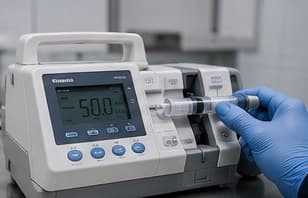

One of the most frequent questions we hear from quality managers and technical staff at treatment centers and industrial sites is: "How often should this device be calibrated?" The common, simple answer is "once a year," a reasonable starting point, but not always the optimal one.
Why One Fixed Interval Doesn't Work for Everything
Consider two devices with very different use profiles: a laboratory balance used daily under controlled conditions, and a pressure gauge used in an industrial environment with vibration, dust, and temperature swings. Applying the same interval to both either over-calibrates the first (unnecessary cost) or under-calibrates the second (elevated risk).
What Determines the Optimal Interval?
Standards such as ILAC-G24 and ISO/IEC 17025 guidance point to several key factors for setting calibration intervals:
- Sensitivity and criticality of use: a device that directly affects patient safety or final product quality needs a shorter interval.
- The device's performance history: if previous calibrations show small, stable deviation, the interval can be cautiously extended, and the reverse is also true.
- Severity of operating conditions: a device used in an environment with large temperature swings, high humidity, or heavy use will drift faster.
- Manufacturer recommendation: a reasonable starting point, but shouldn't be the only criterion.
- Regulatory and sector requirements: some medical and industrial equipment has a maximum interval set by a regulatory body that cannot be exceeded.
Our Approach
For clients on a managed calibration program, Persia Azma System sets each device's interval based on risk analysis and a review of prior calibration history, rather than a single fixed number applied across the entire equipment inventory. This approach maintains regulatory compliance while cutting the unnecessary cost of over-calibration.